DIY boot jack from salvaged red oak
I've been quite unwell this last week with a virus that I picked up while on a work trip and I still haven't shaken it.
As a result I've spent almost no time in the workshop, just half an hour here and there during the week in the periods when I wasn't working or lying on the couch feeling sorry for myself! ..still, there was time enough to get a little project done and a useful one at that.
Our boot jack recently got broken by a relative rushing to get their muddy outdoor boots off quickly quickly enough to reach the Room of Requirement in time. They made it to the room but the boot jack didn't - it was sheared in two, straight across the middle.
I decided to make a new one myself using some of the red oak I managed to salvage from the kitchen that was originally in place when we moved into our house. I regret that I didn't salvage more of it due to my own ignorance when we took apart the old kitchen. I didn't know enough to realise that -- though filthy and badly painted -- most of the cabinets and doors were made of solid hardwood and that there was little MDF or chipboard to be found.
 The boot jack was the standard injection moulded plastic affair, with a rubbery grippy sleeve around the two prongs which grip the boots. You can see where it sheared straight across the middle.
I selected a board of around the right side and sanded back the old finish to just about bare timber. I left a small trace of the lime white finish in place because I think it looks cool.
Then planed it smooth on both sides and traced around the pieces of the original boot jack to make a template outline. I made it a little larger to make sure it would be robust enough to handle the heavy feet of rushing relatives.
 I have access to a bandsaw, which I used to cut around most of the outline except for the U part between the prongs where it was too tight for the bandsaw blade to produce the required curve. I nibbled away at it there and sanded it smooth(ish) afterwards by hand.
Next I used a taper jig on my tablesaw to cut the two long angled cuts down the body of the boot jack. These could also have been cut using a bandsaw or a handsaw. I have an Axminster Taper Cutting Jigs which, for 24 euro (when I bought mine) does the job just fine https://www.axminster.co.uk/axminster-taper-cutting-jig-310078?sel=310078.
 A food tin worked well to mark out the curve on the leg piece and I cut it out using the bandsaw.
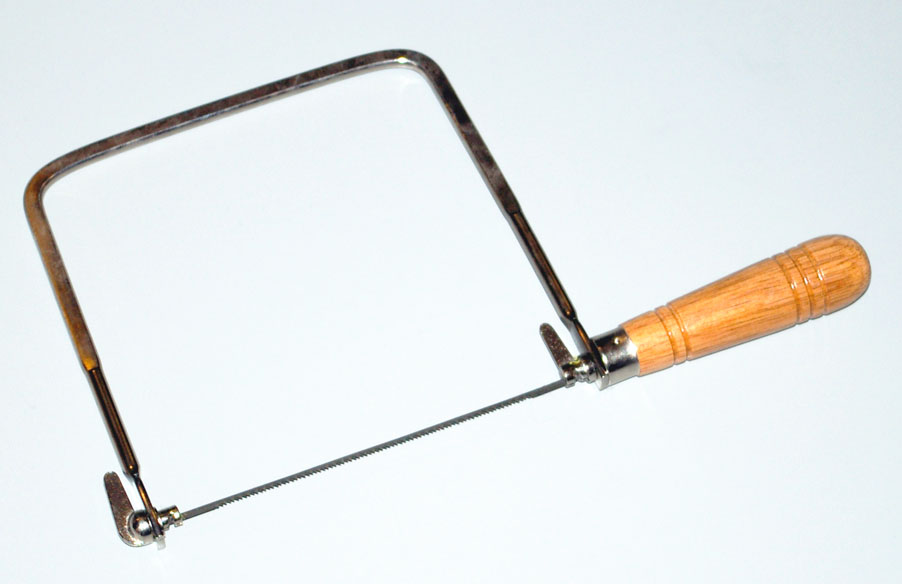 A coping saw would work well for any of the curved cuts if you haven't got access to a bandsaw.
They're available pretty cheaply too. Just buy a pack of spare blades and have loads of practice runs on scrap wood first because it takes a while to develop the knack of using a coping saw without wandering all over the place.
I cut the dado by first drawing two lines directly across the board using the leg piece as a guide, with a speedsquare to keep it at 90 degrees, then using the table saw I cut a dado about 10mm deep into the board.
I did this while it was still a rectangle to make the process easier. I messed up here by overshooting my lines, and had to pack out one side of the dado later to correct the mistake.
I sanded everything to its final form with 60, 80 and 120 grits. Then glued them with standard wood glue and as many clamps as I could get in place. To correct my earlier error with the dado I came back afterwards and used an expanding wood glue to fill the gap, after hardening it was solid as a rock and this thing should last years.

Then I used my router (table mounted) to round over all of the upper edges and before swapping to a 45 degree bit to cut a series of grip grooves across the surface.
If you don't have access to a router then adhesive grip tape would work perfectly (probably better to be honest) for this purpose. Any hardware or skate shop will have this stuff by the roll.
I made up a simple jig to almost match the tapered angle that I had previously cut, so that the router push block would safely apply a right-to-left perpendicular force along the fence. You could argue it would have made more sense to cut the grooves before the tapers. I was able to use one of the wedge offcuts to get close enough to the 90 degrees that I wanted.

I then finish-sanded the whole thing with 220 and 400 grits before applying three coats of teak oil and a final coat of a hard finish poly varnish. One boot jack ready to use!

My lesson learned on this one is yet another reminder that if you have marked out lines for a dado using the actual workpiece then your cuts should NOT remove those lines. Cut within them and then gradually expand the cut while testing the fit. I'll remember it someday.
As a result I've spent almost no time in the workshop, just half an hour here and there during the week in the periods when I wasn't working or lying on the couch feeling sorry for myself! ..still, there was time enough to get a little project done and a useful one at that.
Our boot jack recently got broken by a relative rushing to get their muddy outdoor boots off quickly quickly enough to reach the Room of Requirement in time. They made it to the room but the boot jack didn't - it was sheared in two, straight across the middle.
I decided to make a new one myself using some of the red oak I managed to salvage from the kitchen that was originally in place when we moved into our house. I regret that I didn't salvage more of it due to my own ignorance when we took apart the old kitchen. I didn't know enough to realise that -- though filthy and badly painted -- most of the cabinets and doors were made of solid hardwood and that there was little MDF or chipboard to be found.

I selected a board of around the right side and sanded back the old finish to just about bare timber. I left a small trace of the lime white finish in place because I think it looks cool.
Then planed it smooth on both sides and traced around the pieces of the original boot jack to make a template outline. I made it a little larger to make sure it would be robust enough to handle the heavy feet of rushing relatives.
 I have access to a bandsaw, which I used to cut around most of the outline except for the U part between the prongs where it was too tight for the bandsaw blade to produce the required curve. I nibbled away at it there and sanded it smooth(ish) afterwards by hand.
Next I used a taper jig on my tablesaw to cut the two long angled cuts down the body of the boot jack. These could also have been cut using a bandsaw or a handsaw. I have an Axminster Taper Cutting Jigs which, for 24 euro (when I bought mine) does the job just fine https://www.axminster.co.uk/axminster-taper-cutting-jig-310078?sel=310078.
 A food tin worked well to mark out the curve on the leg piece and I cut it out using the bandsaw.A coping saw would work well for any of the curved cuts if you haven't got access to a bandsaw.
 They're available pretty cheaply too. Just buy a pack of spare blades and have loads of practice runs on scrap wood first because it takes a while to develop the knack of using a coping saw without wandering all over the place.
I cut the dado by first drawing two lines directly across the board using the leg piece as a guide, with a speedsquare to keep it at 90 degrees, then using the table saw I cut a dado about 10mm deep into the board.
I did this while it was still a rectangle to make the process easier. I messed up here by overshooting my lines, and had to pack out one side of the dado later to correct the mistake.
I sanded everything to its final form with 60, 80 and 120 grits. Then glued them with standard wood glue and as many clamps as I could get in place. To correct my earlier error with the dado I came back afterwards and used an expanding wood glue to fill the gap, after hardening it was solid as a rock and this thing should last years.

Then I used my router (table mounted) to round over all of the upper edges and before swapping to a 45 degree bit to cut a series of grip grooves across the surface.
If you don't have access to a router then adhesive grip tape would work perfectly (probably better to be honest) for this purpose. Any hardware or skate shop will have this stuff by the roll.
I made up a simple jig to almost match the tapered angle that I had previously cut, so that the router push block would safely apply a right-to-left perpendicular force along the fence. You could argue it would have made more sense to cut the grooves before the tapers. I was able to use one of the wedge offcuts to get close enough to the 90 degrees that I wanted.

I then finish-sanded the whole thing with 220 and 400 grits before applying three coats of teak oil and a final coat of a hard finish poly varnish. One boot jack ready to use!

My lesson learned on this one is yet another reminder that if you have marked out lines for a dado using the actual workpiece then your cuts should NOT remove those lines. Cut within them and then gradually expand the cut while testing the fit. I'll remember it someday.
Comments